Amicus Brief on the Obligations of States with Respect to the Climate Change Crisis

In an amicus brief to the African Court on Human and Peoples’ Rights, CLX explains how the human right to a clean, healthy, and sustainable environment applies to the climate crisis.
Credit: Jacob Wackerhausen / iStock

This NYU Law Climate Law Accelerator amicus curiae brief was submitted in the matter of the Request for an Advisory Opinion on the Obligations of States with Respect to the Climate Change Crisis and explains how the human right to a clean, healthy, and sustainable environment applies to the climate crisis. Submitted in December 2025 as part of proceedings on States’ climate obligations, the brief was acknowledged by the Court on February 11, 2026.

Drawing on recent landmark advisory opinions from the International Court of Justice and the Inter-American Court of Human Rights, the brief emphasizes that climate change is an existential threat and a human rights crisis, especially in Africa, which is disproportionately harmed despite contributing minimally to global emissions. The submission highlights Africa’s global leadership in recognizing and enforcing the right to a healthy environment, beginning with the African Charter on Human and Peoples’ Rights and reinforced through decisions of African regional and national courts. It argues that this right imposes concrete legal duties on States to mitigate greenhouse gas emissions, phase out fossil fuels, regulate corporate actors, implement robust adaptation measures, protect vulnerable groups, and ensure access to justice and effective remedies. Moreover, amici emphasized that clarifying these legal duties will help strengthen accountability of actors and support communities across Africa already experiencing severe climate impacts.

The brief further underscores that fulfilling these obligations requires international cooperation and financial support, consistent with principles such as prevention, precaution, intergenerational equity, and common but differentiated responsibilities. The amici call on the Court to affirm that the right to a healthy environment provides an enforceable framework for addressing the climate crisis across the African continent and that climate action not just as a policy choice, but a human rights obligation.

Highlights

This amicus curiae brief addresses the obligations of African States to respond to climate change under the human right to a clean, healthy, and sustainable environment. David R. Boyd, César Rodríguez-Garavito, and Ashley Otilia Nemeth submitted it to the African Court on Human and Peoples’ Rights in connection with a request for an advisory opinion brought by the Pan African Lawyers Union. The brief asks how that right should shape States’ duties to prevent climate harm and protect affected people.

The brief examines African recognition of the right to a healthy environment and the legal principles that guide its application. It then addresses five areas of State responsibility: reducing greenhouse gas emissions, adapting to climate impacts, regulating businesses, securing international cooperation and climate finance, and providing access to justice and effective remedies. It draws on African jurisprudence alongside international and regional climate and human rights law.

The authors argue that the right to a healthy environment requires States to adopt and carry out ambitious emissions reduction measures. These include stronger national climate commitments, environmental and human rights impact assessments for significant emissions generating activities, and a priority on phasing out fossil fuels. The brief also cautions against climate measures that risk harming Indigenous peoples and other land based communities. (pp. 18–23)

The brief argues that States must plan, implement, monitor, and adjust adaptation measures as climate risks change. It calls for plans grounded in evidence about who faces the greatest risks, followed by practical measures such as early warning systems, protection of water supplies, resilient agriculture, and ecosystem restoration. The authors argue that a failure to adapt can, in some circumstances, violate the right to a healthy environment and related rights. (pp. 23–27)

The authors argue that States must regulate business activities that contribute to climate change or cause environmental harm. The measures they identify include assessing risks and impacts, requiring transparency and public participation, regulating corporate emissions, and monitoring and enforcing compliance. The brief draws on African cases concerning hazardous waste and extractive industries, as well as broader climate and human rights jurisprudence. (pp. 27–31)

The brief argues that African States cannot meet their climate and human rights obligations without greater support from the international community. It maintains that developed States have duties to assist developing States with mitigation and adaptation, and that developing States have a corresponding basis to seek that support. It also calls for cooperation among African States. (pp. 31–35)

The brief argues that people affected by violations must be able to seek justice and effective remedies, including for harm involving private actors. Depending on the circumstances, remedies may include stopping unlawful conduct, preventing its recurrence, restoring what can be restored, compensation, and other forms of reparation. The brief discusses decisions from African and other courts to illustrate these possibilities. (pp. 35–40)

The brief is a resource for judges, lawyers, advocates, researchers, and policymakers examining climate obligations through African human rights law. Its issue by issue discussion and case references may be especially useful for work on emissions reduction, adaptation, corporate accountability, climate finance, and remedies.

Yes. CLX resources are open-access and may be cited with attribution. If you plan to reproduce substantial portions of the text or figures, please reach out to our team first.

Reports and working papers go through internal review by CLX researchers and, where noted, external subject-matter experts. Educational materials and commentary are reviewed for accuracy but are not formally peer-reviewed academic publications.

Climate litigation moves quickly, and case law referenced here reflects the state of play at the time of publication. Where a resource is part of an ongoing series or learning kit, later installments may reflect more recent developments.

Absolutely — many of our resources, including learning kits and video series, are designed for classroom and clinic use. Non-commercial educational use is encouraged; contact us for permissions on commercial training programs.

You might also like

Articles

Loss & Damage Hub

Helping impacted communities, advocates, and decision-makers address the loss and damage caused by climate change.
Books

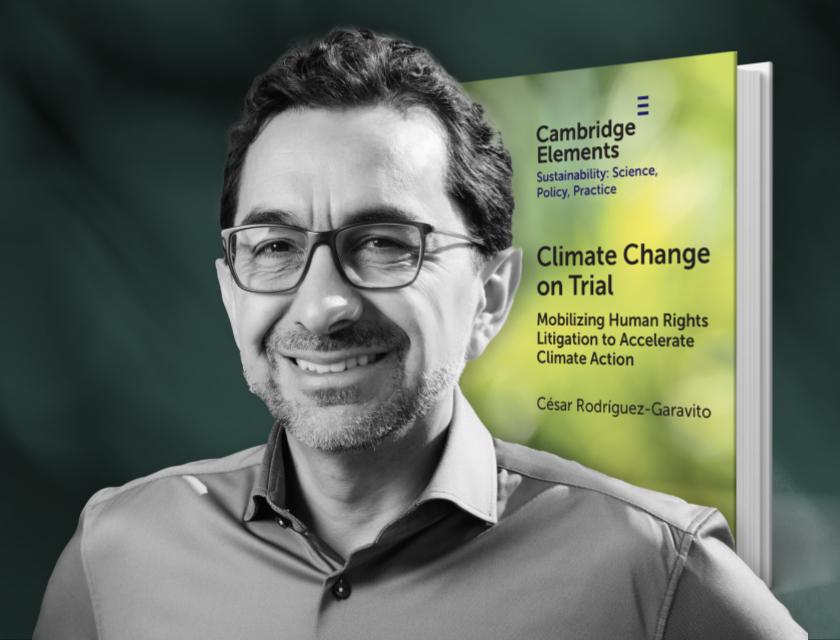
Climate Change on Trial

From landmark court decisions to emerging legal strategies, explore two decades of rights-based climate litigation through a comprehensive learning platform. Start with the free Coursera course, explore in-depth and digestible video explainers, or download the open-access Climate Change on Trial book in English, Spanish, or Portuguese.
Cape High Court in Cape Town, frontal view. Established in 1828.
Articles

Addressing the Climate Emergency: The Untapped Potential of South African Constitutional Law

How can South African constitutional law strengthen climate litigation? This article examines cases challenging fossil fuel projects, identifies gaps in litigation over climate policy and adaptation, and explores the potential of environmental rights, socioeconomic rights, and corporate accountability.