
Drawing on a global study of 467 cases filed through 2024, Part 3 of Climate Change on Trial examines the growth of rights-based climate litigation, the legal arguments shaping it, and the gaps that remain in cases concerning adaptation and climate-related loss and damage.
Credit: Matt Howard / Unsplash

Rights-based climate litigation has grown rapidly across the world. In Part 3 of the Climate Change on Trial: Mobilizing Human Rights Litigation to Accelerate Climate Action video series, Professor César Rodríguez-Garavito draws on CLX’s global case database to examine where these lawsuits are being filed, whom they target, and what they ask courts to do. The database identified 467 cases filed through the end of 2024, with the great majority filed since the 2015 Paris Agreement.

The video traces several legal arguments that have shaped the field. Courts have considered who can bring a climate claim when the harm is widespread, whether a government must do its fair share to reduce emissions regardless of other countries’ actions, and how today’s decisions can restrict the freedoms of future generations. Litigation against companies has also expanded, raising questions about corporate responsibility for greenhouse gas emissions.

These cases frequently draw on climate science and the Paris Agreement to assess whether governments’ actions match the scale and urgency of the climate crisis. Legal arguments also travel between jurisdictions, where advocates adapt them to local laws and circumstances. Yet the video identifies a persistent imbalance: most cases seek emissions reductions, while comparatively few address adaptation or compensation for climate harms. It closes with a question for the next part of the series: Do these legal innovations lead to meaningful climate action?

Highlights

Part 3 examines global trends in rights-based climate litigation. Using CLX’s database of cases filed through 2024, it explores the growth and geographic spread of these lawsuits, their targets and requested remedies, and the legal arguments they have brought before courts.

The video reviews case numbers and filing patterns, the emphasis on emissions reductions, and the increasing number of claims involving companies. It then examines legal developments concerning standing, each country’s share of emissions reductions, the rights of younger and future generations, and the use of climate science in court.

The video reports that CLX identified 140 rights-based climate cases in 2019 and 467 filed by the end of 2024. About 93% of the cases in the latter dataset were filed after 2015. These figures show a rapidly expanding litigation strategy; they do not, by themselves, tell us how many claims succeeded or whether the resulting decisions reduced emissions.

According to the video, roughly nine in ten cases focus on reducing greenhouse gas emissions, and about three-quarters target governments. Far fewer address adaptation to climate impacts or seek compensation for climate-related loss and damage. The pattern helps identify both the field’s dominant strategy and the harms that receive less attention in court.

The fact that climate change is widespread does not end the inquiry into who can bring a case. The video discusses decisions that examine a claimant’s particular exposure or legal position, including the European Court of Human Rights’ recognition that an association representing older women could bring a climate claim in Verein KlimaSeniorinnen Schweiz v. Switzerland. The legal test still depends on the court and the type of claim.

A fair-share argument asks whether a government is doing its part to reduce emissions, even though other countries also contribute to climate change. The video links this reasoning to Urgenda in the Netherlands. It also discusses the German Constitutional Court’s concern that insufficient action today could shift severe emissions-reduction burdens onto younger people in the future.

Corporate cases ask whether major emitters have legal duties to limit their contribution to climate change. The video discusses Milieudefensie v. Shell: a Dutch trial court ordered a specific emissions reduction, but an appellate court overturned that target in 2024 while recognizing a general duty of care concerning emissions. The distinction shows why the legal duty and the remedy ordered in a case must be assessed separately.

The video is useful for lawyers, advocates, researchers, students, and policymakers tracking how human rights arguments are used in climate cases. Its overview can help them compare litigation strategies across jurisdictions, identify underexplored claims involving adaptation and loss and damage, and distinguish legal innovation from evidence of practical impact.

Yes. CLX resources are open-access and may be cited with attribution. If you plan to reproduce substantial portions of the text or figures, please reach out to our team first.

Reports and working papers go through internal review by CLX researchers and, where noted, external subject-matter experts. Educational materials and commentary are reviewed for accuracy but are not formally peer-reviewed academic publications.

Climate litigation moves quickly, and case law referenced here reflects the state of play at the time of publication. Where a resource is part of an ongoing series or learning kit, later installments may reflect more recent developments.

Absolutely — many of our resources, including learning kits and video series, are designed for classroom and clinic use. Non-commercial educational use is encouraged; contact us for permissions on commercial training programs.

You might also like

Articles

Loss & Damage Hub

Helping impacted communities, advocates, and decision-makers address the loss and damage caused by climate change.
Books

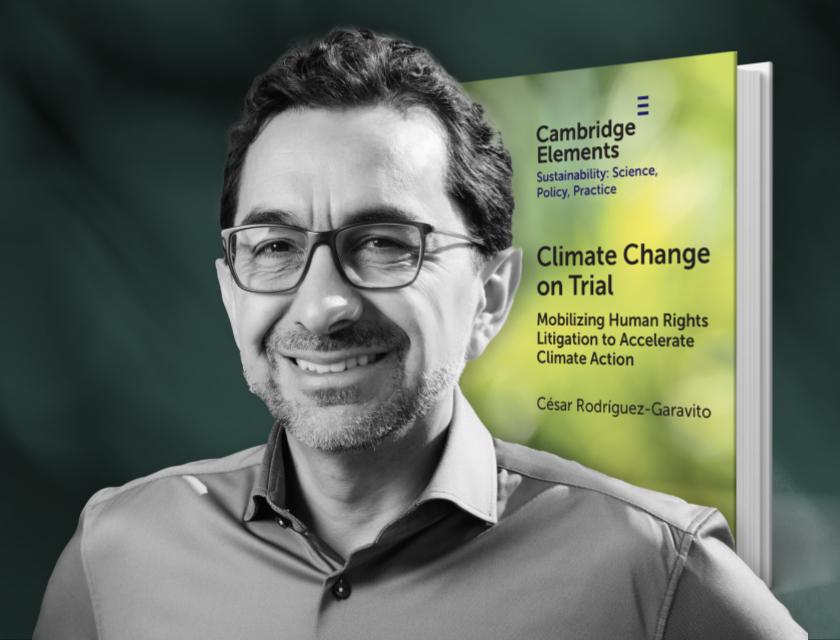
Climate Change on Trial

From landmark court decisions to emerging legal strategies, explore two decades of rights-based climate litigation through a comprehensive learning platform. Start with the free Coursera course, explore in-depth and digestible video explainers, or download the open-access Climate Change on Trial book in English, Spanish, or Portuguese.
Cape High Court in Cape Town, frontal view. Established in 1828.
Articles

Addressing the Climate Emergency: The Untapped Potential of South African Constitutional Law

How can South African constitutional law strengthen climate litigation? This article examines cases challenging fossil fuel projects, identifies gaps in litigation over climate policy and adaptation, and explores the potential of environmental rights, socioeconomic rights, and corporate accountability.