
Litigating Future Fossil Fuels: How a South African Case Prevented Fossil Fuel Exploration

Natural Justice lawyers Melissa Groenink and Lucien Limacher discuss how Wild Coast communities challenged Shell’s planned seismic surveys, the importance of meaningful consultation, and what the case reveals about intervening early in fossil fuel exploration.
Credit: Dym Cozzy / Unsplash

The scientific consensus is clear: in order to avoid warming above 1.5 degrees Celsius, most remaining fossil fuels must stay in the ground. Fossil fuel corporations, however, continue to exploit untapped reserves. So how can litigators preempt corporate attempts to develop more fossil fuel resources than the global climate system can safely sustain?

The recent case against Shell in South Africa offers some answers. In late 2021, litigators succeeded in halting Shell’s plans to conduct seismic surveys off of South Africa’s Wild Coast — a vital and sensitive marine ecosystem.

In this CLX webinar, Natural Justice lawyers Melissa Groenink and Lucien Limacher discuss the legal strategy behind the case and the community mobilization that supported it. They explain why meaningful consultation with affected communities was central to the challenge, and why speaking with a traditional leader could not stand in for hearing from the people whose lives and livelihoods would be affected. The conversation also examines the environmental concerns raised by the proposed surveys and the value of intervening at the exploration stage, before a fossil fuel project advances.

The case offers a view of how community testimony, legal arguments, and public advocacy can work together. It also raises a broader question for climate litigation: how can communities challenge new fossil fuel development while protecting their rights and local environments?

Highlights

This CLX webinar examines a legal challenge to planned seismic surveys for oil and gas off South Africa’s Wild Coast. Natural Justice lawyers Melissa Groenink and Lucien Limacher discuss the December 2021 interim court order, the rights and environmental concerns raised by affected communities, and the role of public mobilization.

The challenge concerned Shell’s planned seismic surveys under an exploration right granted in 2014 and subsequently renewed. The speakers discuss the failure to meaningfully consult affected communities, potential harm to marine life and coastal livelihoods, and a dispute over whether separate environmental authorization was required. The webinar describes the case at an early stage; the environmental authorization question was not ultimately decided by the Constitutional Court.

The communities argued that decisions affecting their ocean, livelihoods, and cultural and spiritual practices required their meaningful participation. As the webinar explains, consultation with a traditional leader did not replace consultation with the affected community members themselves.

The High Court issued an interim order stopping the seismic surveys while the challenge to the exploration right proceeded. It was an early ruling that prevented the surveys from going ahead at that stage, rather than a final decision on the validity of the exploration right.

The speakers describe community organizing and the wider Stop Shell campaign alongside the litigation. Community accounts helped explain what the ocean meant for fishing, livelihoods, and cultural practices, while public advocacy brought wider attention to the proposed surveys.

The webinar highlights the value of acting at the exploration stage, when a project’s future is still being decided. It also shows how legal claims grounded in community rights and environmental concerns can be supported by testimony, expert evidence, and organizing beyond the courtroom.

It is useful for climate and environmental litigators, community advocates, researchers, and policymakers examining fossil fuel exploration and public participation. The discussion provides a concrete example of an early legal challenge, while the later court ruling helps readers trace how the case developed.

Yes. CLX resources are open-access and may be cited with attribution. If you plan to reproduce substantial portions of the text or figures, please reach out to our team first.

Reports and working papers go through internal review by CLX researchers and, where noted, external subject-matter experts. Educational materials and commentary are reviewed for accuracy but are not formally peer-reviewed academic publications.

Climate litigation moves quickly, and case law referenced here reflects the state of play at the time of publication. Where a resource is part of an ongoing series or learning kit, later installments may reflect more recent developments.

Absolutely — many of our resources, including learning kits and video series, are designed for classroom and clinic use. Non-commercial educational use is encouraged; contact us for permissions on commercial training programs.

You might also like

Articles

Loss & Damage Hub

Helping impacted communities, advocates, and decision-makers address the loss and damage caused by climate change.
Books

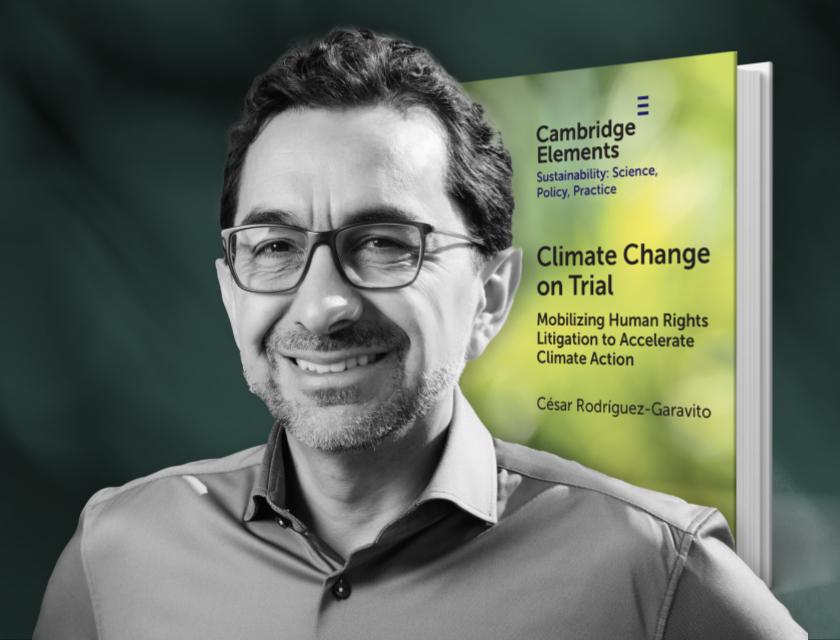
Climate Change on Trial

From landmark court decisions to emerging legal strategies, explore two decades of rights-based climate litigation through a comprehensive learning platform. Start with the free Coursera course, explore in-depth and digestible video explainers, or download the open-access Climate Change on Trial book in English, Spanish, or Portuguese.
Cape High Court in Cape Town, frontal view. Established in 1828.
Articles

Addressing the Climate Emergency: The Untapped Potential of South African Constitutional Law

How can South African constitutional law strengthen climate litigation? This article examines cases challenging fossil fuel projects, identifies gaps in litigation over climate policy and adaptation, and explores the potential of environmental rights, socioeconomic rights, and corporate accountability.