Putting an End to New Fossil Fuel Infrastructure: Confronting EACOP

Access resource
In this CLX webinar, Natural Justice’s Mark Odaga and climate accountability researcher Richard Heede examine the challenge to the East African Crude Oil Pipeline. They discuss its effects on communities and ecosystems, the emissions omitted by narrow pipeline assessments, and the role of scientific evidence in litigation over new fossil fuel infrastructure.
Credit: Wolfgang Weiser / Unsplash

How should a proposed oil pipeline be assessed when its greatest climate impact may come after the oil leaves the pipeline? This question anchors a December 2021 CLX webinar on the East African Crude Oil Pipeline (EACOP), planned to carry heated crude oil from Uganda to the port of Tanga in Tanzania.

The webinar brings together Mark Odaga of Natural Justice and Richard Heede of the Climate Accountability Institute. Odaga explains why four East African civil society organizations brought a case before the East African Court of Justice. They challenged decisions enabling the project and raised concerns about land acquisition, restrictions on farming and livelihoods, water sources, wetlands, and protected areas. He also describes the risks faced by community members and environmental defenders who sought to document those impacts.

Heede examines the project’s greenhouse gas accounting. He argues that an assessment focused on constructing and operating the pipeline misses emissions from shipping and refining the crude oil—and, above all, from using the resulting fuels. In a report published after the webinar, he estimated approximately 379 million tonnes of CO₂ equivalent across those stages over a projected 25-year period. In that analysis, pipeline construction and operation accounted for about 1.8% of the estimated total. The report did not include emissions from developing and operating the upstream oil fields. These figures are projections based on the report’s assumptions, not emissions already released.

Together, the speakers show how scientific evidence and community testimony can inform a challenge to new fossil fuel infrastructure. They discuss the adequacy of environmental assessments, the project’s full climate footprint, and the legal remedies the applicants sought, including restrictions on construction through protected areas. The webinar also offers a candid account of the difficulty of gathering evidence when affected people fear reprisals.

Highlights

The applicants sought to challenge decisions enabling a pipeline from Uganda to Tanzania before construction advanced further. In the webinar, Odaga describes concerns about affected communities’ land and livelihoods, water sources, wetlands, protected areas, and the project’s climate impact. The organizations also wanted the case to test how large fossil fuel projects are assessed under applicable East African legal obligations.

The pipeline is designed to transport waxy crude oil that must be heated along its route. Constructing, pumping, and heating it require energy and produce emissions. Heede’s central point, however, is that examining those operations alone leaves out the much larger projected emissions associated with the oil’s later transport, refining, and use.

They include emissions beyond the pipeline’s own construction and operation, particularly those produced when fuels refined from its crude oil are eventually used. Heede argues that a full account of the project’s climate consequences should consider this intended end use. His analysis also considers shipping and refining, while distinguishing these from emissions at the oil fields upstream of the pipeline.

The report published after the webinar estimated about 379 million tonnes of CO₂ equivalent over a projected 25-year period for pipeline construction and operation, shipping, refining, and product use. It calculated that construction and operation represented about 1.8% of that total, while product use represented the largest share. The estimate excludes upstream oil field development and operation, including associated methane emissions.

Odaga describes restrictions on land use and farming, concerns about compensation, and risks to wetlands and water sources along the route. Those issues affect communities directly, while the emissions analysis addresses the project’s wider climate impact. The case brought these strands together in its challenge to the governments’ decisions and the adequacy of the project assessments.

Heede reviewed the project’s environmental and social impact assessment and developed an independent account of emissions across the oil’s value chain. For the litigants, that evidence helped identify what the assessment had omitted and gave the court a way to examine the scale of the potential climate impact. Odaga also discusses learning from other cases about accounting for external costs and downstream emissions.

When the webinar took place, the applicants were pursuing their challenge and an injunction. The Court’s First Instance Division dismissed the case in November 2023 on the ground that it was filed outside the applicable time limit. The Appellate Division upheld that outcome in November 2025. The dismissal concerned timing, so it should not be described as a judicial finding that the project’s environmental assessment or alleged impacts were adequate.

Climate litigators, environmental researchers, community organizations, and advocates working on infrastructure projects can use it to examine two practical questions: whose harms are captured in a project assessment, and which emissions fall outside its accounting boundary? The discussion also shows why collaboration with affected communities and independent experts matters—and why litigation plans must account for procedural deadlines and risks to people providing evidence.

Yes. CLX resources are open-access and may be cited with attribution. If you plan to reproduce substantial portions of the text or figures, please reach out to our team first.

Reports and working papers go through internal review by CLX researchers and, where noted, external subject-matter experts. Educational materials and commentary are reviewed for accuracy but are not formally peer-reviewed academic publications.

Climate litigation moves quickly, and case law referenced here reflects the state of play at the time of publication. Where a resource is part of an ongoing series or learning kit, later installments may reflect more recent developments.

Absolutely — many of our resources, including learning kits and video series, are designed for classroom and clinic use. Non-commercial educational use is encouraged; contact us for permissions on commercial training programs.

You might also like

Articles

Loss & Damage Hub

Helping impacted communities, advocates, and decision-makers address the loss and damage caused by climate change.
Books

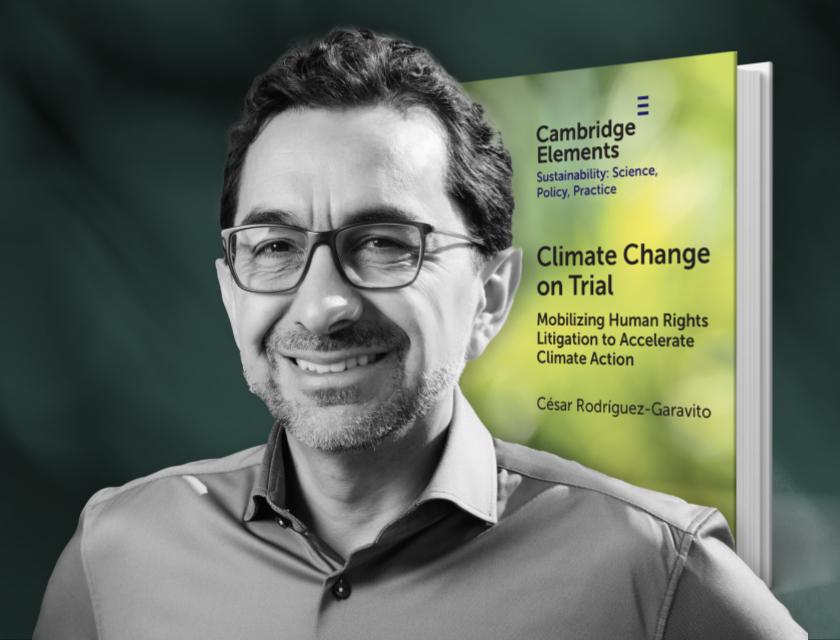
Climate Change on Trial

From landmark court decisions to emerging legal strategies, explore two decades of rights-based climate litigation through a comprehensive learning platform. Start with the free Coursera course, explore in-depth and digestible video explainers, or download the open-access Climate Change on Trial book in English, Spanish, or Portuguese.
Cape High Court in Cape Town, frontal view. Established in 1828.
Articles

Addressing the Climate Emergency: The Untapped Potential of South African Constitutional Law

How can South African constitutional law strengthen climate litigation? This article examines cases challenging fossil fuel projects, identifies gaps in litigation over climate policy and adaptation, and explores the potential of environmental rights, socioeconomic rights, and corporate accountability.