Amicus Brief on States’ Human Rights Obligations as Shaped by the Paris Agreement and Victim Status for Particular Groups like the Elderly in Climate Cases

In an intervention before the European Court of Human Rights, CLX, the Center for Human Rights and Global Justice, and Professor Christina Voigt examine whether older adults can qualify as victims in climate cases. The brief also considers how the Paris Agreement informs states’ human rights obligations to reduce emissions with sufficient speed and ambition.
Credit: Freysteinn G. Jonsson / Unsplash

CLX, in collaboration with Professor Christina Voigt and the Center for Human Rights and Global Justice, submitted an intervention in Swiss Senior Women v. Switzerland before the European Court of Human Rights. The brief addresses two questions in climate litigation: who can bring a human rights claim when climate change affects everyone, and how the Paris Agreement informs states’ obligations to reduce emissions.

The submission argues that older adults can qualify as victims of climate-related human rights violations because they face heightened risks from extreme heat, flooding, other extreme weather, and climate-related health impacts. Drawing on the Court’s approach to victim status, it examines both harms that people are already experiencing and the risk of future harm. It argues that the widespread nature of climate change does not, by itself, prevent people who are particularly affected from bringing a claim.

The brief also examines how the Paris Agreement’s temperature goals and its call for each country’s “highest possible ambition” inform states’ duties under the European Convention on Human Rights. It argues that states must set ambitious emissions targets and put effective measures in place to meet them. Countries with greater capacity, the submission explains, must make deep reductions sooner and reach net-zero emissions earlier. A long-term target cannot substitute for swift action now.

Highlights

This intervention addresses two questions raised by Swiss Senior Women v. Switzerland: whether older adults can qualify as victims under the European Convention on Human Rights in a climate case, and how the Paris Agreement informs states’ obligations to protect human rights from climate harm. (p. 1). The brief examines older adults’ exposure to heat, extreme weather, and disease; the European Court of Human Rights’ approach to victim status for individuals and organizations; and the relevance of the Paris Agreement’s temperature goals and “highest possible ambition” standard to states’ duties under the Convention. (pp. 1–10)

The brief argues that older adults face heightened risks from heatwaves, floods and other extreme weather, deteriorating air quality, and certain diseases. It points, for example, to reduced ability to regulate body temperature and to mobility or health conditions that can make emergencies harder to withstand. These differences matter to its argument about victim status. (pp. 1–3)

The submission argues that an older person may be a direct victim where a state’s alleged failure to regulate emissions has a sufficiently direct connection to harm they face. It also argues that a person may be a potential victim where convincing evidence shows a likelihood of a future violation affecting them personally. In both cases, victim status requires more than a general concern about climate change. (pp. 4–5)

The brief argues that widespread harm does not, by itself, prevent people who are particularly affected from bringing a claim. It also examines whether an association can qualify as a victim, arguing that an organization must show a sufficiently direct effect on its own interests. (pp. 5–6)

The submission argues that the Paris Agreement’s temperature goals and its requirement that countries pursue their “highest possible ambition” help clarify states’ duties under Articles 2 and 8 of the European Convention on Human Rights. It describes this as a duty of due diligence: states must set ambitious targets and take effective domestic measures in light of the risks and their capabilities. (pp. 7–8)

The brief calls for rapid, deep emissions reductions by 2030, backed by effective measures, and argues that states with greater capacity should reach net-zero emissions well before 2050. It also says states should assess mitigation across sectors and prevent domestic measures from merely shifting emissions to other countries. A distant net-zero target, the brief argues, cannot justify delaying action now. (pp. 8–9)

The brief is useful for lawyers, judges, advocates, and researchers working on climate litigation under the European Convention on Human Rights. Its discussion of victim status may help readers assess claims involving groups facing heightened climate risks, while its Paris Agreement analysis offers a framework for evaluating the ambition and implementation of state climate policies.

Yes. CLX resources are open-access and may be cited with attribution. If you plan to reproduce substantial portions of the text or figures, please reach out to our team first.

Reports and working papers go through internal review by CLX researchers and, where noted, external subject-matter experts. Educational materials and commentary are reviewed for accuracy but are not formally peer-reviewed academic publications.

Climate litigation moves quickly, and case law referenced here reflects the state of play at the time of publication. Where a resource is part of an ongoing series or learning kit, later installments may reflect more recent developments.

Absolutely — many of our resources, including learning kits and video series, are designed for classroom and clinic use. Non-commercial educational use is encouraged; contact us for permissions on commercial training programs.

You might also like

Articles

Loss & Damage Hub

Helping impacted communities, advocates, and decision-makers address the loss and damage caused by climate change.
Books

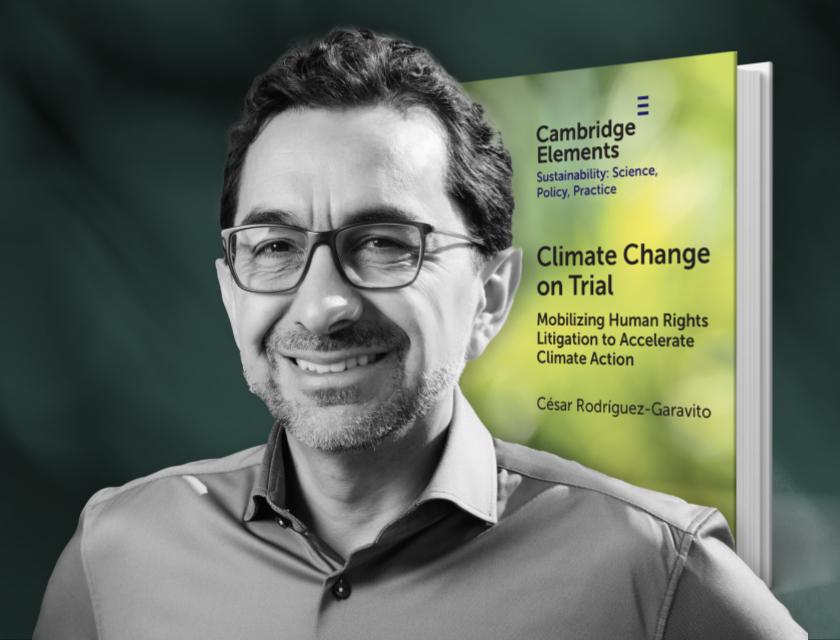
Climate Change on Trial

From landmark court decisions to emerging legal strategies, explore two decades of rights-based climate litigation through a comprehensive learning platform. Start with the free Coursera course, explore in-depth and digestible video explainers, or download the open-access Climate Change on Trial book in English, Spanish, or Portuguese.
Cape High Court in Cape Town, frontal view. Established in 1828.
Articles

Addressing the Climate Emergency: The Untapped Potential of South African Constitutional Law

How can South African constitutional law strengthen climate litigation? This article examines cases challenging fossil fuel projects, identifies gaps in litigation over climate policy and adaptation, and explores the potential of environmental rights, socioeconomic rights, and corporate accountability.