Saving the Amazon through Human Rights Litigation?

Access resource
In this webinar, Brazilian legal and policy experts examine lawsuits seeking to restore climate funding, maintain enforcement against Amazon deforestation, and implement existing climate laws. Their discussion connects forest protection with Indigenous and traditional communities’ rights, scientific evidence, and the proposed right to a stable climate.
Credit: Kawe Rodrigues / Unsplash

What can courts do when a government has environmental laws, climate funds, and plans to prevent deforestation, but fails to put them into practice? In this webinar, CLX brings together Brazilian legal and policy experts to examine three approaches to protecting the Amazon through litigation.

Suely Araújo discusses cases before Brazil’s Supreme Federal Court concerning the Amazon Fund and the Climate Fund. The cases challenged the interruption of funding and governance arrangements intended to support forest protection and climate action. They ask whether the government can leave established environmental policies unable to operate.

A federal prosecutor working in Amazonas describes a different challenge: maintaining inspections of areas at high risk of deforestation during the COVID-19 pandemic. The case connects enforcement against illegal logging, mining, and fires with the health and territorial rights of Indigenous peoples and traditional communities. An initial order requiring inspections was suspended on appeal, illustrating the difficulty of securing sustained action through the courts.

Délton Winter de Carvalho discusses a public interest action brought by the Institute of Amazonian Studies. It seeks implementation of Brazil’s National Policy on Climate Change and its plan to prevent and control deforestation in the Legal Amazon, known as PPCDAm. The claim draws on scientific evidence and constitutional rights to seek forest restoration, adequate resources, and recognition of a fundamental right to a stable climate for present and future generations.

Together, the cases show how litigation can press governments to carry out duties they have already adopted.

Highlights

The speakers examine what happens when existing environmental commitments are left without funding, enforcement, or implementation. Their cases seek to make established funds, inspection duties, and deforestation plans work in practice. This gives courts concrete government actions and legal obligations to examine.

The Amazon Fund case challenged changes that had interrupted the fund’s governance and its ability to finance new forest protection projects. The Climate Fund case concerned the government’s failure to operate the fund and allocate its resources for climate action. Both raised the question of whether the executive could effectively suspend an established environmental policy through inaction.

The prosecutor describes a request to maintain inspections in ten areas identified as deforestation hotspots. Illegal activity did not cease during the pandemic, while intrusions, mining, logging, and fires posed risks to Indigenous peoples and traditional communities. The case treated environmental enforcement as connected to territorial protection and health.

A lower court initially ordered inspections and an enforcement plan, but an appellate court suspended that order. As the speaker explains, obtaining an urgent ruling is only one step: its effect can change on appeal, and continued monitoring of government action remains necessary. The webinar describes the case at that stage; it does not establish its final outcome.

Its case sought enforcement of duties already set out in Brazil’s National Policy on Climate Change and the Action Plan for Prevention and Control of Deforestation in the Legal Amazon (PPCDAm). Délton Winter de Carvalho explains that grounding the claim in domestic law avoids making the case depend on a debate over the Paris Agreement’s legal force. The requested remedies include compliance with the plan, resources for implementation, and restoration related to deforestation beyond the applicable target.

Scientific evidence helps establish the scale of deforestation and the gap between government targets and actual outcomes. The Institute’s case also argues that climate stability is necessary to protect constitutional rights, including life, health, dignity, and an ecologically balanced environment. On that basis, it asks the court to recognize a fundamental right to a stable climate for present and future generations.

Climate litigators, environmental organizations, researchers, students, and advocates working with Indigenous peoples and traditional communities can use the discussion to compare three approaches: restoring climate finance, requiring enforcement in threatened areas, and compelling implementation of a national climate plan. It is especially useful for examining how a legal claim can connect a specific government omission to evidence, affected rights, and a remedy a court can order.

Yes. CLX resources are open-access and may be cited with attribution. If you plan to reproduce substantial portions of the text or figures, please reach out to our team first.

Reports and working papers go through internal review by CLX researchers and, where noted, external subject-matter experts. Educational materials and commentary are reviewed for accuracy but are not formally peer-reviewed academic publications.

Climate litigation moves quickly, and case law referenced here reflects the state of play at the time of publication. Where a resource is part of an ongoing series or learning kit, later installments may reflect more recent developments.

Absolutely — many of our resources, including learning kits and video series, are designed for classroom and clinic use. Non-commercial educational use is encouraged; contact us for permissions on commercial training programs.

You might also like

Articles

Loss & Damage Hub

Helping impacted communities, advocates, and decision-makers address the loss and damage caused by climate change.
Books

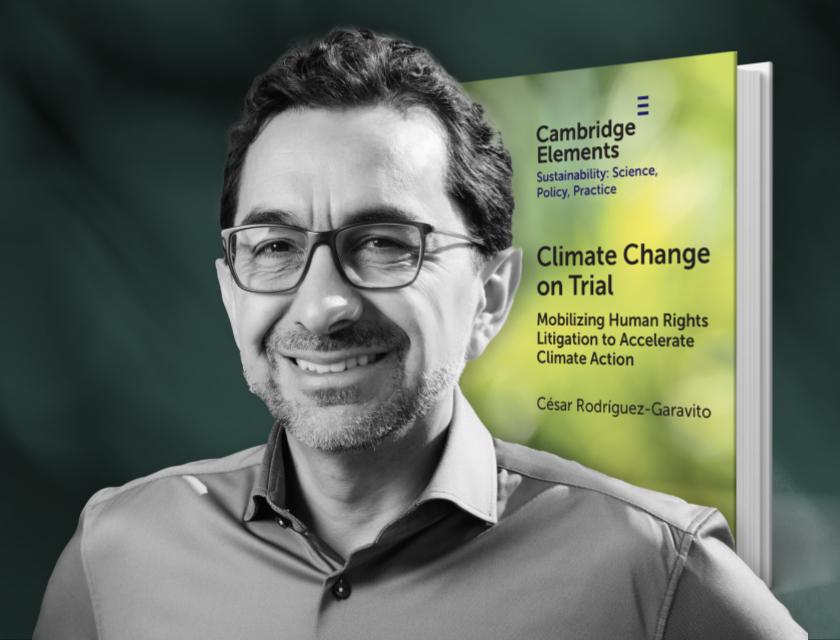
Climate Change on Trial

From landmark court decisions to emerging legal strategies, explore two decades of rights-based climate litigation through a comprehensive learning platform. Start with the free Coursera course, explore in-depth and digestible video explainers, or download the open-access Climate Change on Trial book in English, Spanish, or Portuguese.
Cape High Court in Cape Town, frontal view. Established in 1828.
Articles

Addressing the Climate Emergency: The Untapped Potential of South African Constitutional Law

How can South African constitutional law strengthen climate litigation? This article examines cases challenging fossil fuel projects, identifies gaps in litigation over climate policy and adaptation, and explores the potential of environmental rights, socioeconomic rights, and corporate accountability.