Holding Fossil Fuel Companies Accountable

Access resource
Explore the Philippines’ landmark Carbon Majors inquiry and its lessons for corporate climate accountability, including how emissions attribution, evidence of industry knowledge, and human rights standards can inform litigation and advocacy.
Credit: Carl Kho / Unsplash

The Philippines’ National Inquiry on Climate Change brought corporate responsibility for climate harm before a national human rights institution. This CLX webinar examines the inquiry’s development and its implications for efforts to hold major fossil fuel companies accountable for climate-induced human rights harms, including through measures supporting mitigation and adaptation.

Hosted by the Climate Change Accelerator at NYU Law’s Center for Human Rights and Global Justice, the discussion features Hasminah Paudac of Greenpeace Southeast Asia, Ben Franta of Stanford University, Rick Heede of the Climate Accountability Institute, and César Rodríguez-Garavito of CLX at NYU Law. The session brings together advocacy, historical research, emissions attribution, and human rights perspectives on corporate climate accountability.

The inquiry followed a 2015 petition asking the Commission on Human Rights of the Philippines to investigate the responsibility of major carbon producers for climate-related human rights violations. Its approach combined scientific and legal submissions with evidence of affected communities’ experiences. For practitioners, the inquiry offers a case study in connecting emissions traced to identifiable producers with questions about corporate conduct and responsibility, while using a human rights institution to develop evidence and advance public accountability.

Highlights

The inquiry examined whether major fossil fuel and cement producers bear responsibility for climate-related human rights harms in the Philippines. Initiated through a 2015 petition, it brought claims concerning 47 companies before a national human rights institution. Its significance lies in connecting corporate contributions to a global problem with the rights and experiences of people affected by its consequences.

Richard Heede’s research uses historical production records to estimate emissions associated with particular fossil fuel and cement producers. It includes emissions from the use of marketed fuels as well as relevant operational and manufacturing emissions. This approach makes producers’ contributions measurable alongside national emissions inventories, enabling researchers to examine responsibility across the fossil fuel supply chain.

Historical documents help establish when industry actors understood the risks associated with their products. Ben Franta’s research identifies industry awareness of potentially dangerous carbon dioxide accumulation decades before climate change became a prominent public issue. Such evidence can inform arguments about foreseeable harm; the Commission’s later report also examined obstruction and misinformation as possible grounds for accountability under Philippine law.

An inquiry can gather testimony, examine scientific and historical evidence, clarify human rights standards, and recommend government or corporate action. The Philippine process created a forum for submissions from communities, experts, advocates, and companies. Its findings can inform subsequent litigation and policy debates, although courts must independently determine the legal consequences in cases brought before them.

The webinar is useful for climate litigators, human rights advocates, researchers, students, and national human rights institutions exploring corporate accountability. It offers a case study for considering how producer-level emissions evidence, historical records, and community testimony can support an accountability strategy. Practitioners can use it to assess the contribution—and limits—of human rights inquiries within broader efforts to secure mitigation, adaptation, and remedies.

Yes. CLX resources are open-access and may be cited with attribution. If you plan to reproduce substantial portions of the text or figures, please reach out to our team first.

Reports and working papers go through internal review by CLX researchers and, where noted, external subject-matter experts. Educational materials and commentary are reviewed for accuracy but are not formally peer-reviewed academic publications.

Climate litigation moves quickly, and case law referenced here reflects the state of play at the time of publication. Where a resource is part of an ongoing series or learning kit, later installments may reflect more recent developments.

Absolutely — many of our resources, including learning kits and video series, are designed for classroom and clinic use. Non-commercial educational use is encouraged; contact us for permissions on commercial training programs.

You might also like

Articles

Loss & Damage Hub

Helping impacted communities, advocates, and decision-makers address the loss and damage caused by climate change.
Books

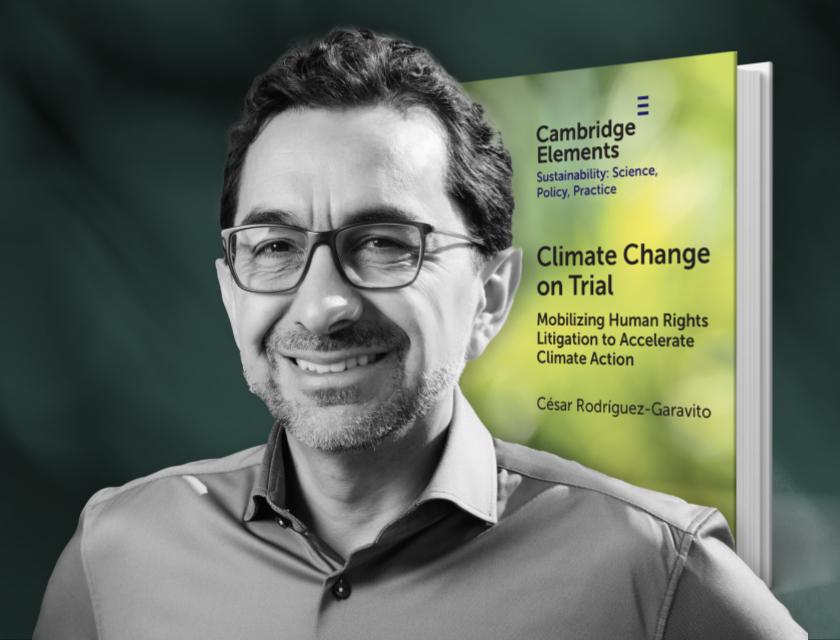
Climate Change on Trial

From landmark court decisions to emerging legal strategies, explore two decades of rights-based climate litigation through a comprehensive learning platform. Start with the free Coursera course, explore in-depth and digestible video explainers, or download the open-access Climate Change on Trial book in English, Spanish, or Portuguese.
Cape High Court in Cape Town, frontal view. Established in 1828.
Articles

Addressing the Climate Emergency: The Untapped Potential of South African Constitutional Law

How can South African constitutional law strengthen climate litigation? This article examines cases challenging fossil fuel projects, identifies gaps in litigation over climate policy and adaptation, and explores the potential of environmental rights, socioeconomic rights, and corporate accountability.